Paper to Digital Transformation with AI


For private banks and wealth managers, this is no longer a side project. Migrating legacy records to digital, searchable formats is becoming a prerequisite for operational efficiency, audit readiness and client experience. With AI automation, the transition can be managed in a controlled, secure and highly scalable way.
Why Paper-to-Digital Transformation Matters for Banks
Traditional paper archives create operational friction at every step of the value chain.
- Limited data access. Retrieving client information from folders and boxes is slow and often depends on specific individuals who know where to look.
- Manual errors and compliance risk. Handwritten notes, manual input and fragmented updates make it harder to maintain a reliable, audit-ready view of clients.
- High storage and handling costs. Physical archives require space, dedicated staff and often external storage providers.
- Inefficient workflows. Teams spend time searching, manually retyping or reconciling information instead of focusing on client-facing or strategic work.
Over time, these constraints limit growth, slow down projects and make regulatory reviews more complex than necessary.
The Role of AI in Migrating Legacy Records
To move away from paper in a sustainable way, financial institutions need more than a basic scanning project. They need a structured, AI-augmented process that turns documents into reliable data.
1. Intelligent Data Extraction
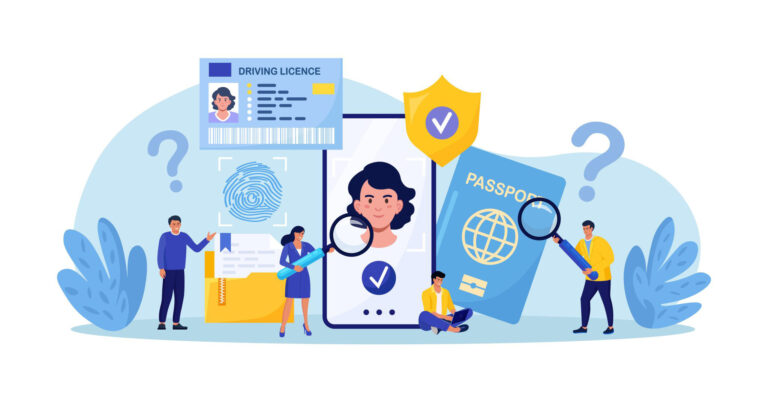
AI-powered OCR engines identify and extract key fields from scanned documents with high accuracy. This covers identification documents, contracts, forms, statements and historical files.
2. Automated Classification and Tagging
Documents are automatically sorted and tagged by type, client, date or other business attributes. This makes future searches, audits and reviews significantly easier.
3. Structured Data for Core Systems
Once extracted, data can be mapped and loaded into core banking systems, CLM platforms or data warehouses. This closes the gap between archives and live operational processes.
Insight
Institutions that invest in AI-based document digitisation report sharp reductions in processing time and a much higher level of confidence in the quality and completeness of their historical data.
Key Benefits of AI Automation in Financial Institutions
Moving from paper to digital with AI brings tangible benefits across operations, compliance and client service.
What banks gain with AI-driven paper-to-digital migration
-
Higher operational efficiency.
Automated document processing reduces turnaround times and frees up capacity across operations and middle office teams. -
Better data accuracy.
AI-driven extraction and validation minimise the risk of manual retyping errors and inconsistent updates. -
Stronger regulatory posture.
Digital records provide clearer audit trails, easier sampling and faster responses to regulator or internal audit requests. -
Improved client experience.
Relationship managers and support teams gain faster access to relevant information, which translates into more responsive service and better advice.
How to Start Your Paper-to-Digital Transition
Rather than treating paper-to-digital migration as a one-off clean-up, leading banks position it as a structured programme with clear phases.
- Identify priority archives and use cases, for example credit files, onboarding files or compliance documentation.
- Define data models and quality rules so that digitised records can be reused across systems.
- Run pilot batches with AI automation, measure accuracy and adjust rules before scaling.
- Integrate the new digital archive with core banking, CLM or credit platforms so that information is immediately usable.
With this approach, the organisation can move progressively, while already reaping the benefits of faster access to digitised records.
What Makes SpeciTec Different
SpeciTec focuses on combining secure deployment with flexible AI capabilities so that banks stay in control of both data and models.
Paper-to-digital transformation designed for private banks
- Fully on-premise by design. All processing runs within the bank’s own infrastructure, with no dependency on external cloud services.
- Model-agnostic AI. Banks can choose from different AI models, including European options, to meet performance and data governance requirements.
- Cloud-free architecture. Client data never leaves the institution. This supports strict confidentiality policies and internal security standards.
Combined with SpeciTec’s experience in private banking environments, this ensures that paper-to-digital projects remain aligned with regulatory, security and architectural constraints.
Start Your Paper-to-Digital Transformation
With solutions such as SpeciVIMCO, banks and wealth managers can convert legacy paper archives into structured, intelligent digital databases. The result is a foundation that supports AI, analytics and automation projects across the organisation.
Whether you are looking to unlock historical client files, prepare for future regulatory reviews or simply reduce the burden of paper, an AI-supported paper-to-digital programme can deliver measurable results in a relatively short timeframe.
Frequently Asked Questions
Paper archives constrain growth, slow down onboarding and complicate audits. By digitising records, private banks gain faster access to client data, reduce operational overhead and create a more robust foundation for compliance and analytics.
The solution can process a wide range of records, including onboarding files, credit files, historical correspondence, scanned forms and identification documents. AI models adapt to different layouts and formats to extract relevant data points.
When configured correctly and combined with quality checks, AI-based OCR and data structuring can reach a very high level of accuracy compared with manual retyping. It also ensures greater consistency across large volumes of records.
Projects are usually organised in phases so that day-to-day activity continues without interruption. Batches can be processed in parallel with normal operations, and teams progressively switch to digital records as they become available.
SpeciTec solutions can be deployed fully on-premise, with all data processed and stored locally. No information is sent to public clouds, and access is controlled through existing security and governance frameworks within the bank.
Ready to Modernise Your Legacy Archives?
Discover how SpeciVIMCO and SpeciTec’s AI capabilities can help you transform paper records into a secure, searchable and compliant digital asset.
SpeciTec Experts
SpeciTec develops software platforms for private banks, focused on credit, risk, onboarding and compliance. Our teams combine deep banking expertise with pragmatic technology to help institutions digitalise operations without compromising security.