When Even Gold Gets Sold: Why Collateral Behaviour Matters Under Stress
Gold is often treated as the ultimate safe-haven asset. But recent market moves show a familiar pattern: in moments of stress, even high-quality assets can be sold aggressively. Not because the long-term investment thesis has disappeared, but because liquidity is needed immediately.
For private banks managing Lombard credit and collateralised lending, this creates a critical question: how well do you understand the way your clients' collateral behaves when markets turn?
Safe Haven Does Not Mean Stress-Proof
The concept of a "safe-haven" asset is deeply embedded in financial thinking. Gold, government bonds, and certain currencies are expected to hold value—or even appreciate—during market turmoil. And in many ways, they do. Gold has historically preserved wealth over decades, acting as a hedge against inflation, currency devaluation, and geopolitical uncertainty.
But here is the critical distinction that many overlook: being valuable is not the same as being stable under stress.
When liquidity becomes scarce—during a market crash, a credit crunch, or a sudden redemption wave—investors and institutions sell what they can, not necessarily what they want to. Gold, being highly liquid, becomes a source of cash precisely because it can be sold quickly.
Key Insight
During the March 2020 COVID-19 market crash, gold prices dropped nearly 12% in just eight trading days—not because gold had lost its fundamental value, but because investors needed immediate liquidity and sold their most liquid holdings first.
This pattern has repeated throughout history: in 2008, gold initially fell during the Lehman crisis before recovering. The same occurred during the 2011 debt ceiling crisis and various emerging market stress events. The lesson is clear: safe-haven status does not guarantee price stability during acute stress.
The Banking Question: Do You Understand How Collateral Behaves?
For private banks, the issue extends far beyond market observation. It becomes a direct operational and risk management challenge.
Consider a typical Lombard lending scenario: a high-net-worth client has a credit facility secured against a diversified portfolio including equities, bonds, and gold. The bank has calculated loan-to-value (LTV) ratios, set margin thresholds, and implemented what appear to be conservative haircuts.
But what happens when stress arrives?
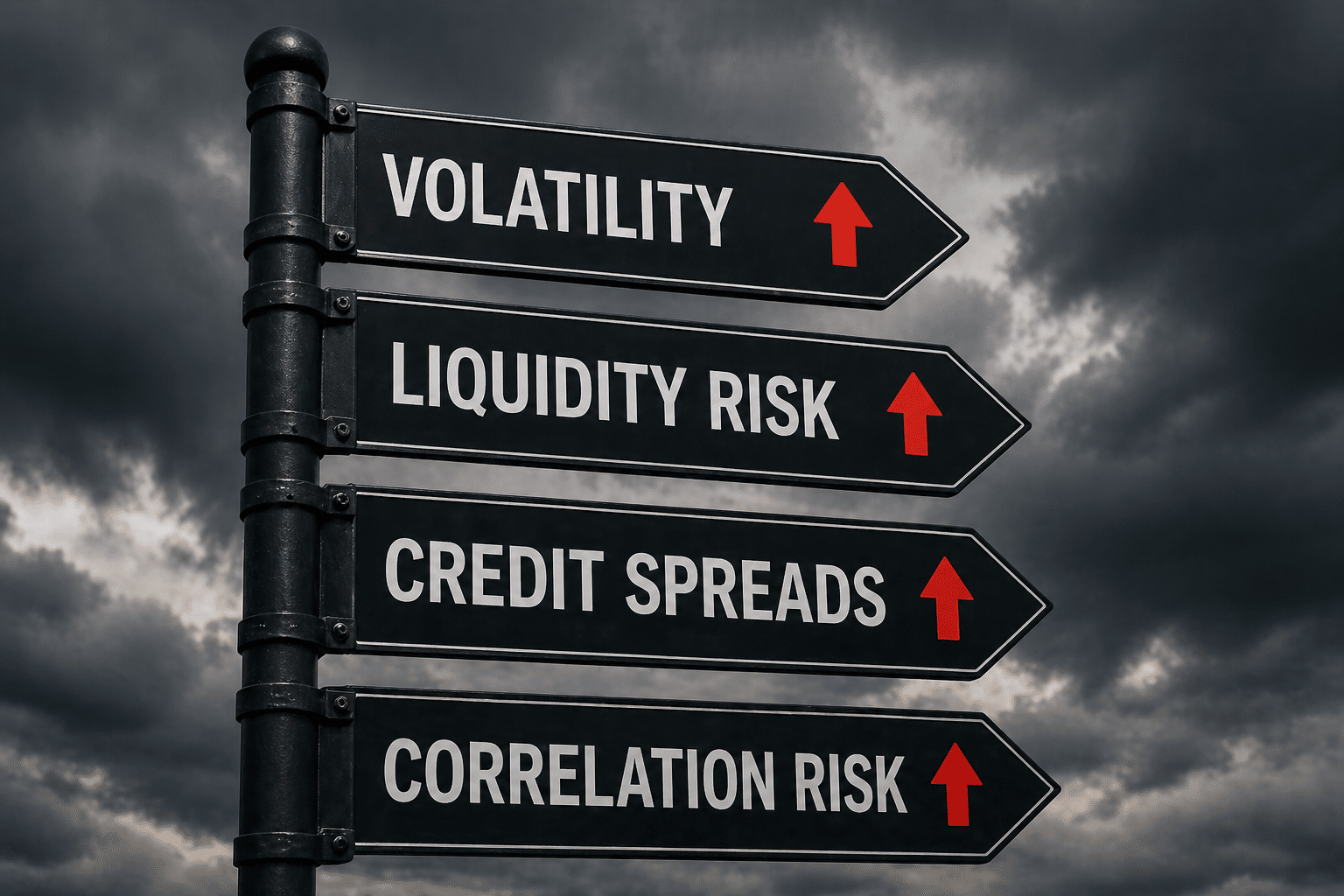
- Correlations shift. Assets that normally move independently begin moving together—often downward.
- Liquidity becomes one-sided. Bid-ask spreads widen dramatically, and large positions become difficult to liquidate without significant price impact.
- Market depth disappears. What looked like a liquid market in calm conditions becomes shallow and volatile.
- Large unwinds affect pricing. Forced selling by leveraged investors creates cascading price declines.
- Concentration risk becomes visible. Positions that seemed diversified reveal hidden correlations under stress.
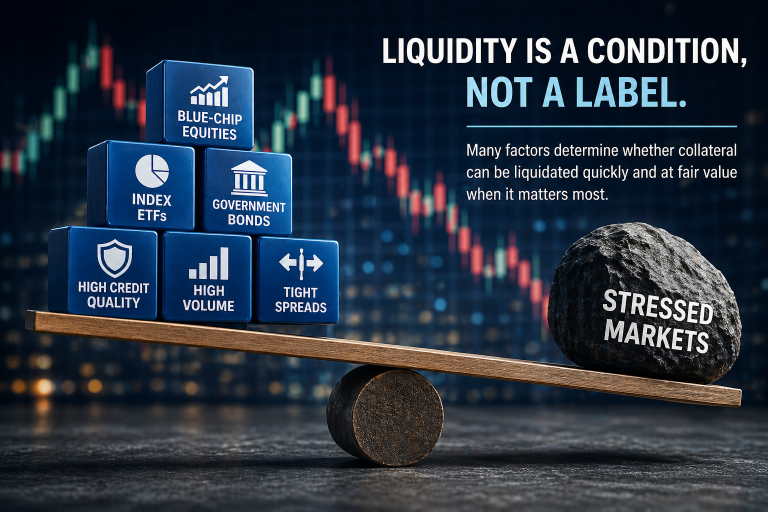
The critical question for private banks is not simply "What collateral do we hold?" but rather "How will this collateral behave when liquidity matters most?"
What Can Change Under Stress
Understanding stress behaviour requires moving beyond static analysis. Here are the key dynamics that private banks must monitor:
1. Correlation Breakdown
In normal markets, gold and equities often show low or negative correlation—this is precisely why gold is considered a diversifier. But during acute stress, correlations can spike toward 1.0 as all assets fall together. This "correlation breakdown" can devastate portfolios that rely on diversification for protection.
2. Liquidity Transformation
Assets that are liquid under normal conditions can become illiquid overnight. Even gold—one of the most liquid assets globally—experiences significant spread widening during stress. For less liquid collateral types, the transformation can be even more dramatic.
3. Haircut Inadequacy
Standard haircuts are typically calibrated using historical volatility. But stress events often exceed historical precedents. A 20% haircut on gold might seem conservative based on normal conditions but could prove inadequate during a 2008-style liquidity crisis.
4. Margin Call Timing
The timing of margin calls becomes critical. Banks that rely on end-of-day valuations may find themselves chasing deteriorating positions. By the time a margin call is issued, the collateral value may have fallen further.
The Stress Testing Gap
Most collateral stress tests focus on price shocks—"what happens if gold falls 20%?" But comprehensive stress testing must also consider:
- Liquidity shocks—can we actually sell at those prices?
- Correlation shocks—are our diversification assumptions valid?
- Operational shocks—can we execute margin calls in time?
- Concentration shocks—are multiple clients exposed to the same risks?
Why Monitoring Matters: Beyond Static Views
Traditional collateral management relies on periodic reviews—daily, weekly, or even monthly assessments of LTV ratios and collateral quality. This approach worked adequately when markets moved slowly and stress events unfolded over weeks or months.
Today's markets are different. Flash crashes, algorithmic trading, and interconnected global markets mean that significant collateral deterioration can occur within hours. A static view of collateral is no longer sufficient.
Private banks need:
- Real-time visibility into collateral valuations, not just end-of-day snapshots
- Dynamic LTV monitoring that updates continuously as market prices change
- Early warning signals that identify emerging risks before they trigger margin calls
- Concentration analysis that aggregates exposures across clients and asset classes
- Liquidity assessment that considers actual market conditions, not just historical averages
- Automated alerts that notify risk teams immediately when thresholds are approached
This shift from static to dynamic monitoring represents a fundamental change in how private banks approach collateral risk management.
The SpeciCRED Approach: Real-Time Collateral Intelligence
SpeciCRED was designed specifically to address these challenges for private banks managing Lombard credit and collateralised lending.
Our platform provides:
Continuous Monitoring
Real-time collateral valuation and LTV tracking that updates throughout the trading day, ensuring risk teams have current visibility into portfolio health.
Automated Alerts
Configurable early warning signals that notify teams when collateral approaches breach thresholds—before margin calls become necessary.
Concentration Analysis
Aggregated views that identify hidden concentration risks across clients, asset classes, and market sectors.
Stress Scenario Modeling
Built-in stress testing that goes beyond simple price shocks to model correlation and liquidity impacts.
Traceable Workflows
Complete audit trails that document all credit decisions, monitoring activities, and risk responses for regulatory compliance.
Transform Your Collateral Monitoring
See how SpeciCRED can give your credit and risk teams real-time visibility into collateral behaviour—before stress reveals hidden vulnerabilities.
Request a Demo Learn MoreConclusion: The Question That Matters Most
Gold will likely remain a safe-haven asset for long-term wealth preservation. But for private banks managing credit risk, the long-term view is insufficient. What matters is how collateral behaves in the short term—during the exact moments when liquidity and market stress test your assumptions.
In moments of stress, the most important question is not only what collateral do you hold?
It is: how will it behave when liquidity matters most?
Private banks that can answer this question with real-time data and dynamic monitoring will be better positioned to protect both their clients and their own balance sheets when the next stress event arrives.
Frequently Asked Questions
Gold is sold during market stress because investors and institutions need immediate liquidity. When cash is urgently required—such as during margin calls, redemption requests, or funding pressures—participants sell their most liquid assets first. Gold, being highly liquid and easily tradable, becomes a source of cash precisely because it can be sold quickly. This doesn't mean gold has lost its fundamental value; rather, it demonstrates that safe-haven status doesn't prevent short-term selling pressure during acute liquidity events.
Private banks should move beyond historical volatility-based haircuts to stress-calibrated approaches. This means considering tail-risk scenarios that exceed historical norms, incorporating liquidity adjustments for stressed market conditions, accounting for correlation breakdown during market turmoil, and regularly backtesting haircuts against actual stress event outcomes. Banks should also consider dynamic haircuts that adjust automatically based on market conditions and concentration levels.
Key early warning signals include: rising asset correlations across normally uncorrelated holdings, widening bid-ask spreads indicating reduced liquidity, increasing market volatility indices, LTV ratios trending toward margin thresholds, concentration increases in specific assets or sectors, unusual trading volumes suggesting forced liquidation, and credit spread widening in related markets. Real-time monitoring systems can track these signals continuously and alert risk teams before thresholds are breached.
Traditional periodic reviews provide snapshots—daily, weekly, or monthly assessments of collateral values and LTV ratios. Real-time monitoring provides continuous visibility that updates throughout the trading day. This enables earlier identification of emerging risks, faster response to deteriorating positions, more accurate margin call timing, and better protection during fast-moving market events. In today's markets where significant changes can occur within hours, real-time monitoring has become essential for effective risk management.
Correlation breakdown occurs when assets that normally have low or negative correlation suddenly begin moving together—typically downward—during market stress. This matters significantly for collateral portfolios because diversification assumptions become invalid precisely when they matter most. A portfolio that appears well-diversified under normal conditions may experience simultaneous declines across all holdings during stress, resulting in much larger overall losses than stress tests predicted. Banks must model correlation breakdown scenarios explicitly rather than assuming normal correlation relationships will persist.